General
Botox for Downturned Mouth Corners Lifts the Lower Face. Wider Injection Patterns Buy More Lift and More Side Effects.
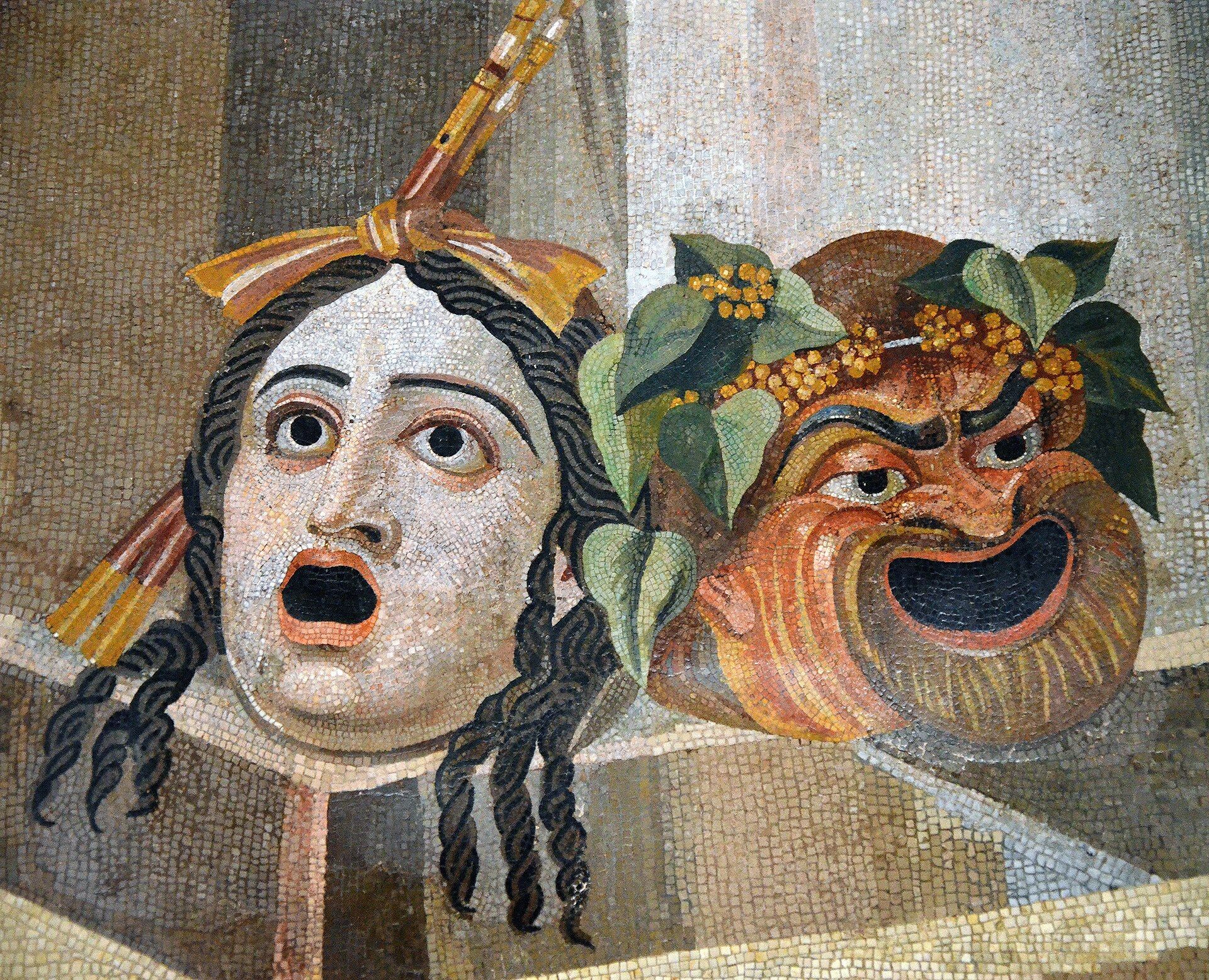
Greek theatre taught audiences to read a face from the back row. The comic mask turned the corners of its mouth up. The tragic mask turned them down. Nobody needed a script to know which play had begun.
I think of those masks when a patient in my clinic in Seoul tells me that colleagues keep asking whether she is upset. She is not. Her mouth corners simply sit lower than her mood.
These downturned mouth corners can be treated with botulinum toxin (Botox) injected into the depressor anguli oris (DAO), the small muscle that pulls the corner of the mouth down. A 2026 randomized trial suggests the lift grows with how widely the lower face is treated, and so do the side effects. Marionette lines, the folds that run down from the mouth corners, are a related but separate problem. The sensible plan treats the smallest area that does the job.
What does botulinum toxin do to a downturned mouth corner?
Botulinum toxin lifts the lower face by weakening depressor muscles, which shifts the balance toward the muscles that lift. A 2026 trial describes lower-face lifting with toxin as modulation of the balance between depressor and elevator muscles (Munoz-Lora et al., 2026). The DAO is one of those depressors. It plays a key role in expressing sadness by lowering the oral commissures, the corners of the mouth (Urso et al., 2026).
That is why this treatment does not fill anything. It changes a tug of war rather than adding volume.
Does injecting the lower face really lift it? What a randomized trial measured
In one randomized, double-blind trial, every injection pattern produced measurable lifting, and wider patterns produced more. Munoz-Lora et al. (2026) assigned 80 patients to four groups that differed in the number and distribution of injections into the platysma (the thin muscle of the neck and jawline) and the DAO. They measured tissue displacement with 3D stereophotogrammetry, along with the Global Aesthetic Improvement Scale and FACE-Q patient questionnaires, at 15, 30 and 90 days.
Greater treatment extent was associated with more tissue displacement at 15 days (p = 0.004) and with displacement that persisted longer. Patient-reported outcomes peaked at 30 days and stayed higher in the intermediate and high extent groups. The price was side effects: adverse effects were higher in the most extensive group at 90 days (p = 0.006). In the multivariable analysis, more injection points predicted more displacement (β = 1.875, p = 0.040), and higher BMI predicted less (β = −4.361, p = 0.022) (Munoz-Lora et al., 2026).
Is the depressor anguli oris where the standard landmark says it is?
Often it is not. In a 2026 ultrasound study of 290 patients, only 20.2% had the DAO aligned with the classic mid-pupillary landmark. In the other 79.8%, the muscle was displaced laterally by 2 to 5 mm. Mean depth was 3.1 mm, and greater in overweight and obese patients (p below .001). In 12%, the DAO overlapped the neighbouring depressor labii inferioris (Urso et al., 2026).
The authors argue that blind injections may reduce efficacy and raise side effects, and that pre-injection ultrasound should be considered (Urso et al., 2026). This is a diagnostic study of Caucasian patients, so it argues for care in planning rather than a new rule for every patient.
How much toxin goes into the DAO, and where?
An Italian expert consensus put the mean total DAO dose at 5.6 U, the same figure reported by the international consensus papers it reviewed. Fourteen experts completed a three-round consensus process and compared it with 16 international consensus papers. For the DAO, the strongest indication was correction of downturned oral commissures. Most experts (92.8%) preferred intramuscular injection, typically at a single point lateral to the marionette line, to stay within a safe zone and avoid diffusion to the depressor labii inferioris (Fundarò et al., 2026).
This is expert opinion, not trial data. It is a map of current practice, not a prescription.
Are marionette lines treated with toxin or with filler?
Marionette lines are folds, and filler is the tool with the most data for folds. Percec et al. (2020), in Plastic and Reconstructive Surgery, used 3D stereophotogrammetry to measure how skin moves during facial expressions in 30 women aged 41 to 65 who received hyaluronic acid filler in nasolabial folds and marionette lines, and compared them with 20 untreated women aged 25 to 35. At day 42, treatment had reduced peak stretch in the folds for most expressions. For three measures, including the marionette line during an open smile, treated women no longer differed significantly from the younger controls. The study was Level IV, followed patients for only 42 days, enrolled only Caucasian women, and the authors list a small sample as a limit.
Sattler et al. (2020) treated 154 people with two hyaluronic acid fillers from one manufacturer in a single-arm, evaluator-blinded, open-label study. For marionette lines, 79.4% and 81.4% of people treated with the two products improved by at least one point on the Merz Aesthetics Scales at about six months, against a 60% benchmark (p = 0.0005 and p = 0.0004). At 12 to 13 months, the rates were roughly 50% to 66% depending on product and side. Injection-site hematoma affected 48.7% of those treated, and there was no control group.
A mouth corner pulled down by a muscle and a fold carved by years of movement are different problems. The consultation has to decide which one the patient has, or whether it is both.
Does lifting the mouth corners change how a face reads to others?
Possibly, and it is worth discussing before treatment. A narrative review in Journal of Cosmetic Dermatology notes that lower-face targets such as the DAO belong to distinct facial action units that carry emotional signals. Modulating them potentially alters cues linked to socially relevant emotions such as sadness and contempt, and to social dimensions including dominance and approachability (Hopf et al., 2026). This is a framework drawn from psychology literature, not a measurement of treated patients.
What are the limits of this evidence?
Some will say a randomized, double-blind trial settles the question. It settles less than it seems. The 2026 trial compared four active patterns rather than toxin against no treatment, treated the platysma and the DAO together so it cannot isolate the DAO's own contribution, and followed patients for 90 days (Munoz-Lora et al., 2026). The dose consensus is opinion (Fundarò et al., 2026). The ultrasound study mapped anatomy and did not test outcomes (Urso et al., 2026). Both filler studies were uncontrolled for the treatment effect, and both include authors affiliated with the manufacturer (Percec et al., 2020; Sattler et al., 2020).
Clinical Bottom Line
Botulinum toxin for downturned mouth corners is supported by one randomized trial of broader lower-face patterns and by expert consensus, and the evidence for the DAO alone is thinner. In that trial, more coverage meant more lift and more adverse effects. Anatomy varies, so where the needle goes matters as much as how much goes in.
The choice is rarely between treating and not treating. It is which pattern, how wide, and which of the two problems, the pull or the fold, the patient actually has.
The Greeks needed only the corners of a mouth to tell tragedy from comedy. The task is to move those corners a little, and leave the actor in character.
For clinical assessments and consultation in Seoul: itsdrbock.com
Cover image: Mosaic of the theatrical masks of Tragedy and Comedy, Roman (2nd century AD), Capitoline Museums. Public domain. Source: Wikimedia Commons

References
Fundarò, S., Molinari, P., Brunelli, G., Cazzulani, M., Dalla Costa, G., Dell'Avanzato, R., D'Emilio, R., Di Gregorio, C., Franceschelli, A., Renga, M., Salti, G., Santorelli, A., Urso, U. S., & Zollino, I. (2026). Italian consensus and review in lower face mimetic muscle treatment with botulinum toxin-A. Toxins, 18(8), 332. https://doi.org/10.3390/toxins18080332
Hopf, A. G. M., Buchheim, A., Hopf, M., & Eilert, D. W. (2026). A psychological guide to lower face botulinum toxin injections: Baseline emotional functions of facial expressions. Journal of Cosmetic Dermatology, 25(4), Article e70833. https://doi.org/10.1111/jocd.70833
Munoz-Lora, V. R. M., Rogerio, V., Roschel, P., Zillo, L., Cotofana, S., & Germani, M. (2026). Injection mapping and dose escalation for botulinum toxin treatment on the lower face: A randomized, double-blind clinical trial. Aesthetic Surgery Journal, Article sjag165. https://doi.org/10.1093/asj/sjag165
Percec, I., Bertucci, V., Solish, N., Wagner, T., Nogueira, A., & Mashburn, J. (2020). An objective, quantitative, dynamic assessment of hyaluronic acid fillers that adapt to facial movement. Plastic and Reconstructive Surgery, 145(2), 295e–305e. https://doi.org/10.1097/PRS.0000000000006461
Sattler, G., Kerscher, M., Noah, E. M., Prager, W., Fischer, T. C., Ogilvie, P., Hofmann, M., Dersch, H., & Odena, G. (2020). Safety and performance of Etermis 3 and 4 in wrinkles/folds treatment and facial volume enhancement: A prospective, evaluator-blinded, open-label study. Clinical, Cosmetic and Investigational Dermatology, 13, 591–599. https://doi.org/10.2147/CCID.S244598
Urso, S. U., Calabria, E., Franceschelli, A., Genovese, B., Molinari, P., Piludu, M., Zuccaro, M., Bastiani, L., & Mosti, G. (2026). Determining the position, morphology, and location of the depressor anguli muscle through ultrasound in the Caucasian population. Aesthetic Surgery Journal Open Forum, 8, Article ojag091. https://doi.org/10.1093/asjof/ojag091
More From the Blog

Chemical Peels for Acne Work About Equally Well. The Real Choice Is How Your Skin Tolerates the Acid.
Laser Tattoo Removal Works Best on Black and Blue Ink. Whether a Picosecond Laser Does It Better Is Still Debated.