General
Botox for Forehead and Frown Lines Works. Where It Goes Decides Whether Your Brows Drop.
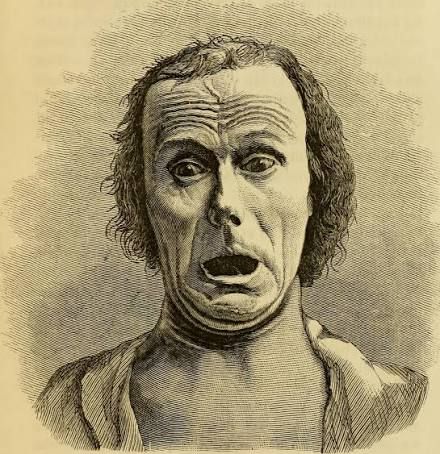
In 1872, Charles Darwin published The Expression of the Emotions in Man and Animals, a book that treats the human face as a readable record of what a person feels. The frown gets a good deal of his attention, and it is easy to see why. A vertical crease between the eyebrows can make a calm person look angry or tired in a single photograph.
Patients bring me the modern version of this problem. They do not ask for a particular product. They ask me to remove the frown lines between the brows and the horizontal lines across the forehead, and they ask it as one request. Botox for forehead lines and glabellar (frown) lines does work, and the choice of brand matters less than where the toxin is placed. The forehead is a lift muscle as well as a wrinkle muscle, and treating it carelessly can lower the brow.
Does botulinum toxin work for glabellar frown lines, and does the brand matter?
Botulinum toxin softens glabellar lines, and two recent trials found the compared formulations behaved alike. Botulinum toxin is a purified protein that blocks the signal telling a muscle to contract. In the frown area it is injected into the procerus and corrugator muscles, the small muscles that pull the brows together and down.
Two randomised trials from the same Brazilian research group compared a ready-to-use liquid form of abobotulinumtoxinA with other products. In the first, 40 women aged 25 to 50 (20 per group) received the ready-to-use abobotulinumtoxinA or onabotulinumtoxinA at equivalent doses and were followed for five months (Gonçalves et al., 2026). Muscle activity and glabellar line severity were comparable between groups throughout. Satisfaction was higher with onabotulinumtoxinA at two months, and injection pain was greater with the ready-to-use product.
In the second, 38 men aged 25 to 50 received either ready-to-use or powder abobotulinumtoxinA and were followed for four months (da Silva Junior et al., 2025). The authors again found comparable efficacy, durability and safety, with higher injection pain for the ready-to-use form. Across these two trials, the formulation did not change how well the frown lines responded. Both trials were small and short, and neither included a placebo arm, so they tell us the products behave alike, not how large the benefit is.
Is Botox on the forehead safe, and what happens around the eyes?
The large safety dataset for upper facial lines shows more adverse events than placebo, with eyelid and brow ptosis (drooping) among the clearest signals. A pooled analysis of 18 registration studies of onabotulinumtoxinA, covering 5,298 participants with glabellar, crow's feet and forehead lines, reported on adverse events (Brin et al., 2024). In the double-blind placebo-controlled population (3,431 treated, 1,359 on placebo), adverse events occurred in 42.1% of treated participants versus 35.8% on placebo, and serious adverse events in 1.6% versus 1.3%.
The events that were significantly more frequent than with placebo included eyelid ptosis, brow ptosis, eyelid oedema, eyelid sensory disorder, skin tightness and facial pain. Most readers will find this unsurprising. A toxin that relaxes muscles near the eyelids and brows can occasionally relax the wrong ones.
How does where you inject the forehead change the brow?
The injection pattern in the frontalis, the forehead muscle that lifts the brow, changes both how well the lines soften and where the brow ends up. This is the part of the story I find most useful in practice, and it comes from a Plastic and Reconstructive Surgery randomised trial. Jabbour et al. (2018) gave 45 patients (three groups of 15) injections of the muscles that pull the brows down, and then injected the frontalis in one of three patterns: a V shape, a middle horizontal line, or a high horizontal line.
Two weeks later, the brow sat lower at most measured positions in every group, while the outer edge of the brow rose. The middle horizontal pattern lowered the brow more than the high pattern. Lines on contraction improved more with the V pattern than with the other two, whereas upper forehead injections were less effective on the lines but spared the brow from dropping. Nothing here is a free lunch: the pattern that smooths best is not the pattern that protects brow height best.
What are the limits of this evidence?
Some will say that three trials and one pooled analysis are not much to go on for one of the most common cosmetic procedures in the world. That is partly true. The two formulation trials enrolled one sex each and followed patients for a few months. The injection pattern trial had no placebo group, only 15 patients per arm, and a two week follow-up. The pooled safety analysis was retrospective and combined studies run for different regulatory purposes.
What the evidence supports is narrower than the marketing around it. It supports effective softening of frown lines, similar behaviour between the compared formulations, and a real, product-independent trade-off in the forehead between line smoothing and brow height.
What should you ask before treating forehead and frown lines?
Ask which muscles will be treated and how the brow position will be protected. A frown-line plan that treats the procerus and corrugator, and a forehead plan that leaves enough frontalis activity to hold the brow, are two different decisions. People whose brows already sit low, or who rely on the forehead to keep their eyelids open, tend to need a more conservative plan. A good assessment looks at the face at rest and in motion, and the plan should be explicit about what will be treated and what will be left alone.
The Clinical Bottom Line
Botulinum toxin is an effective, well-studied way to soften frown lines and forehead lines, and the pattern of injection matters more than the product. The two formulation trials suggest that choosing between these products is not where the outcome is won or lost. The brow position trial suggests that placement is.
Side effects such as eyelid and brow ptosis are real and uncommon, and they are the reason the forehead deserves more planning than its reputation suggests. Individual anatomy, brow position and the look you want decide the plan, and a conservative first session leaves room to adjust.
Darwin saw the frown as a signal the face cannot help sending. The goal of treatment is not to silence the face. It is to stop one crease from speaking louder than the person.
For clinical assessments and consultation in Seoul: itsdrbock.com
References
Brin, M. F., De Boulle, K., Liew, S., Carruthers, A., Carruthers, J., Rivkin, A., Wu, Y., Kawashima, M., Yushmanova, I., Boodhoo, T. I., & Lee, E. (2024). Safety and tolerability of onabotulinumtoxinA in the treatment of upper facial lines from global registration studies in 5298 participants: A meta-analysis. JAAD International, 14, 4–18. https://doi.org/10.1016/j.jdin.2023.07.021
Darwin, C. (1872). The expression of the emotions in man and animals. John Murray.
da Silva Junior, S. V., Neves, M. L. B. B., Sanchez-Ayala, A., Cebola, P. M. T. C., Carbone, A. C., Câmara-Souza, M. B., Poluha, R. L., & De la Torre Canales, G. (2025). Comparing ready-to-use and powder abobotulinumtoxinA for glabellar lines: A randomized, controlled, triple-blinded clinical trial. Journal of Cosmetic Dermatology, 24(7), Article e70308. https://doi.org/10.1111/jocd.70308
Gonçalves, J. R., Valesan, L. F., Shishido, A. C. L. N., Sanchez-Ayala, A., Carbone, A. C., Câmara-Souza, M. B., & De la Torre Canales, G. (2026). Is ready-to-use abobotulinumtoxinA more effective than onabotulinumtoxinA for glabellar lines? A randomized, controlled, triple-blinded clinical trial. Journal of Cosmetic Dermatology, 25(4), Article e70816. https://doi.org/10.1111/jocd.70816
Jabbour, S. F., Awaida, C. J., ElKhoury, J. S., Rayess, Y. A., Makhoul, R. B., Kechichian, E. G., & Nasr, M. W. (2018). The impact of upper face botulinum toxin injections on eyebrow height and forehead lines: A randomized controlled trial and an algorithmic approach to forehead injection. Plastic and Reconstructive Surgery, 142(5), 1212–1217. https://doi.org/10.1097/PRS.0000000000004836
More From the Blog
Chemical Peels for Acne Work About Equally Well. The Real Choice Is How Your Skin Tolerates the Acid.
Laser Tattoo Removal Works Best on Black and Blue Ink. Whether a Picosecond Laser Does It Better Is Still Debated.