General
Botox for Scars Beats Saline. Whether It Beats Steroids Is a Different Question.
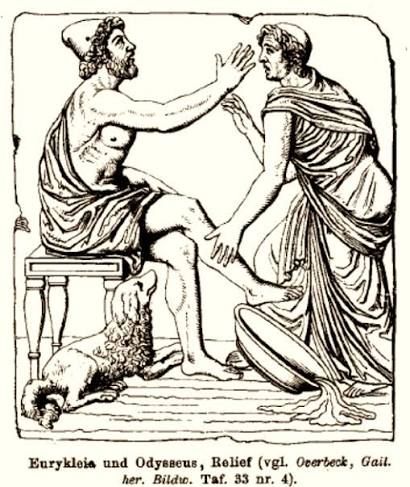
In Book 19 of the Odyssey, Odysseus comes home disguised as a beggar. His old nurse, Eurycleia, is washing his feet when she feels a scar on his leg, left by a boar hunt in his youth, and knows him at once. The disguise had fooled everyone else. The scar did not.
Patients who ask me about scar treatment want the opposite of what Odysseus got. They want a mark that nobody would recognize. Many ask about botulinum toxin (Botox) for scars, injected into or around a healing wound or an established raised scar, and whether it does anything that a plain saline injection would not.
My argument is that pooled randomized trials show botulinum toxin type A improves scar scores compared with saline, but that against steroid injection, the established alternative for raised scars, the one meta-analysis that compared them found the steroid scored better, and the safety data rest on very few events. Four papers carry the case: a 2026 systematic review and meta-analysis and a 2022 meta-analysis of randomized trials, both in Plastic and Reconstructive Surgery, and two 2025 meta-analyses in the Journal of Cosmetic Dermatology.
Does botulinum toxin improve scars compared with saline injection?
In pooled randomized trials, botulinum toxin type A scored better than saline on every scar measure the 2022 meta-analysis reported (Li et al., 2022). That analysis pooled 21 randomized controlled trials. On the Vancouver Scar Scale, a clinician-rated scale on which a lower score means a better scar, botulinum toxin was lower than saline (standardized mean difference, SMD, −0.73; 95% CI −1.12 to −0.35; P = 0.0002). An SMD puts different scoring scales on one footing so that studies can be pooled (Li et al., 2022).
The other measures pointed the same way. On the Stony Brook Scar Evaluation Scale the grade was higher than with saline (SMD 1.42; 95% CI 0.83 to 2.00), and on an appearance visual analog scale the scores were higher (SMD 1.14; 95% CI 0.69 to 1.60). Scar width was narrower than in the control groups (SMD −1.11; 95% CI −1.38 to −0.83) (Li et al., 2022). The authors graded the level of evidence as therapeutic level II (Li et al., 2022).
A 2026 systematic review and meta-analysis widened the net to 19 studies with 686 patients, including cohort studies as well as randomized trials. It reported a Vancouver Scar Scale mean difference of −1.07 (95% CI −1.59 to −0.56; P < 0.0001), a narrower scar width (mean difference −0.21; 95% CI −0.33 to −0.09), and better scores on the Stony Brook scale (mean difference 1.64; 95% CI 0.78 to 2.50) and the Patient and Observer Scar Assessment Scale (mean difference −1.28; 95% CI −2.02 to −0.53) (Chávez-Goicochea et al., 2026). Patients treated with botulinum toxin also had a higher relative risk of satisfaction (RR 1.83; 95% CI 1.10 to 3.07) (Chávez-Goicochea et al., 2026). The abstract does not give the units for scar width or say which comparators each outcome used.
How does botulinum toxin compare with steroid injection for scars?
On the Vancouver Scar Scale, the steroid scored better, and the authors wrote that steroids may be more potent (Li et al., 2022). In the 2022 meta-analysis, the botulinum toxin score was higher than the steroid score (SMD 0.85; 95% CI 0.27 to 1.43; P = 0.004), which on this scale is the worse result (Li et al., 2022).
The picture is not one-sided. Scar pain on a visual analog scale was lower with botulinum toxin than with steroids (SMD −2.57; 95% CI −4.40 to −0.74; P = 0.006) (Li et al., 2022). The authors suggested botulinum toxin as an alternative for patients who cannot receive steroid treatment (Li et al., 2022).
That is a narrower claim than "Botox is better for scars," and it is the claim the evidence supports.
What do the facial surgery trials add?
They show a consistent benefit after facial surgery, with a lot of disagreement between trials on how large it is (Jiang et al., 2025). The 2025 meta-analysis in the Journal of Cosmetic Dermatology pooled 12 randomized trials of botulinum toxin in postoperative facial scars (cleft and other birth-defect repairs, surgical wounds and trauma). Ten trials used saline as the control and two used no treatment. The injected concentrations ranged from 10 to 75 U/mL (Jiang et al., 2025).
Vancouver Scar Scale scores favored botulinum toxin (SMD −0.41; 95% CI −0.73 to −0.10; I² = 43.6%), and scar width was narrower (SMD −1.00; 95% CI −1.20 to −0.80; I² = 0%) (Jiang et al., 2025). I² describes how much the trials disagree: 0% means little disagreement, and higher numbers mean more. The visual analog scale showed I² = 84.5%, which is high, so the size of the appearance benefit differs a lot from trial to trial (Jiang et al., 2025).
A second 2025 meta-analysis in the same journal pooled 12 randomized trials with 644 patients and follow-up of 6 to 27 months for prevention of facial trauma scars and hypertrophic scars (raised, thickened scars) (Lu et al., 2025). Most of its trials came from Chinese-language databases, and the authors list differences in injection dose and timing, a wide age range and small samples among their limitations (Lu et al., 2025).
Is botulinum toxin for scars safe?
The adverse effects reported were minor, but the numbers are too small to rule out less common problems. The 2026 review described adverse effects as minimal and transient, with no significant difference between groups (Chávez-Goicochea et al., 2026). In the facial surgery meta-analysis, two cases of eyelid ptosis (drooping) and one asymmetrical smile occurred in botulinum toxin groups, and one mild headache occurred in a control group (Jiang et al., 2025).
Those are the effects one would expect from a toxin that weakens muscle near the face, and they are reasons to ask who is injecting and where. The pooled safety estimate for the four trials that reported it was 1.74 with a 95% CI of 0.41 to 7.43 (Jiang et al., 2025). An interval that wide cannot show the treatments are equally safe. It shows the trials are too small to tell. The 2025 analysis of facial trauma scars reported no serious adverse reactions (Lu et al., 2025).
The strongest objection
Some will say the case is closed. Four meta-analyses, hundreds of patients, and every one of them favors botulinum toxin. That is partly true. The direction of the effect is consistent across all four papers (Chávez-Goicochea et al., 2026; Jiang et al., 2025; Li et al., 2022; Lu et al., 2025).
But these meta-analyses share many of the same small trials, so they are not four independent confirmations. I did not check how much their included studies overlap, which is a reason to be careful in counting them as separate votes. The trials differ in dose, injection site and timing (Jiang et al., 2025; Lu et al., 2025). Heterogeneity on appearance scores was high (Jiang et al., 2025). The facial surgery analysis reported no certainty-of-evidence rating, and its authors note that several trials had fewer than 20 patients per group (Jiang et al., 2025). As I read them, both 2025 analyses contain figures I could not reconcile, for example a Vancouver Scar Scale interval that spans zero beside a very small P value in one (Lu et al., 2025), so I trust their designs more than their effect sizes. And the one head-to-head signal against steroids is a single pooled comparison in an abstract (Li et al., 2022).
What should you ask before botulinum toxin for a scar?
Ask first what the scar is and when it formed. The evidence here is mostly for scars after surgery or trauma, injected around a fresh or healing wound, and for raised scars compared with steroid or saline (Jiang et al., 2025; Li et al., 2022). A different kind of scar is a different question.
Ask what the comparison is. If a raised scar is the problem, ask why botulinum toxin rather than a steroid injection, because the one pooled comparison favored the steroid on the main scale (Li et al., 2022). Ask about the dose and the injection site, which varied widely across trials (Jiang et al., 2025). And ask what happens if a muscle is weakened by mistake, since ptosis and an asymmetrical smile were reported (Jiang et al., 2025).
The Clinical Bottom Line
Botulinum toxin is a reasonable option to discuss for scars, with a clear caveat about what it has been shown to beat. In pooled randomized trials it improved scar scores compared with saline (Li et al., 2022), and a 2026 review of 19 studies found better scar quality and higher patient satisfaction, with minimal and transient adverse effects (Chávez-Goicochea et al., 2026). Against steroid injection, the one pooled comparison favored the steroid on the Vancouver Scar Scale, though botulinum toxin was less painful (Li et al., 2022).
The honest promise is a scar that may look somewhat better, not one that disappears. The trials are small, they differ from one another, and they cannot yet tell you the best dose, the best timing or how long the benefit lasts.
Eurycleia knew her master by his scar. Most of us would like our scars to be less recognizable, and the trials suggest the toxin may help a little.
For clinical assessments and consultation in Seoul: itsdrbock.com
References
Chávez-Goicochea, A. P., Lozano-Peralta, K., Caballero-Alvarado, J., Lau-Torres, V., & Zavaleta-Corvera, C. (2026). Efficacy and safety of botulinum toxin type A for pathological scar prevention: A systematic review and meta-analysis. Plastic and Reconstructive Surgery, 158(1), 53e–64e. https://doi.org/10.1097/PRS.0000000000012631
Jiang, A., Jiang, R., & Liu, T. (2025). A meta-analysis of the efficacy and safety of botulinum toxin type A for the management of scars after facial surgery. Journal of Cosmetic Dermatology, 24(3), Article e70111. https://doi.org/10.1111/jocd.70111
Li, M. Y., Chiu, W. K., Wang, H. J., Chen, I. F., Chen, J. H., Chang, T. P., Ko, Y., & Chen, C. (2022). Effectiveness of botulinum toxin type A injection on scars: A systematic review and meta-analysis of randomized controlled trials. Plastic and Reconstructive Surgery, 150(6), 1249e–1258e. https://doi.org/10.1097/PRS.0000000000009742
Lu, J., Chen, Y., Xie, H., & Wang, Y. (2025). Botulinum toxin type A for preventing facial trauma and hypertrophic scars: A meta-analysis and trial sequential analysis. Journal of Cosmetic Dermatology, 24(11), Article e70501. https://doi.org/10.1111/jocd.70501
More From the Blog

Chemical Peels for Acne Work About Equally Well. The Real Choice Is How Your Skin Tolerates the Acid.
Laser Tattoo Removal Works Best on Black and Blue Ink. Whether a Picosecond Laser Does It Better Is Still Debated.