General
Lip Flip Botox Changes the Shape of the Upper Lip, Not Its Volume. How Long It Lasts Is Still Disputed.
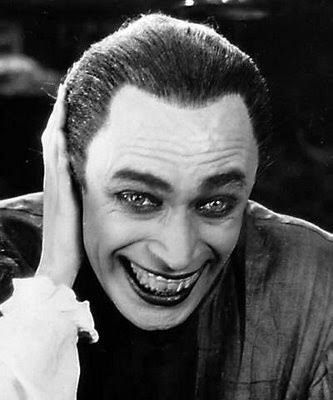
In Paul Leni's 1928 silent film The Man Who Laughs, a boy named Gwynplaine has a grin cut permanently into his face. Whatever he feels, his mouth announces delight, and the audience reads him that way for the rest of the story. It is an extreme lesson in a quiet fact. A few millimetres at the lip change what a face seems to say.
Patients ask me for the gentle version of that idea. No scalpel and no filler, just a few units of botulinum toxin so the upper lip rolls outward and shows a little more of its pink border. This is the lip flip (also called upper lip eversion with botulinum toxin). It changes how the upper lip sits, not how much lip there is. The trials so far are small, uncontrolled and short, and they do not agree on how long the change lasts.
What is a lip flip, and how is it different from lip filler?
A lip flip is a small dose of botulinum toxin placed along the upper lip border to relax part of the ring-shaped muscle around the mouth (the orbicularis oris), so the lip turns slightly outward. Filler adds material. The lip flip adds none.
In a 2025 systematic review of seven studies, a typical total dose was 4 to 6 units, with 0.5 to 2 units per injection site across 2 to 6 sites (Pitchford et al., 2025). Most of those studies used onabotulinumtoxinA. The review described the result as an eversion of the lip with minimal downtime, and compared it with filler only in descriptive terms. No study in it was a controlled comparison with filler.
Public interest is not in doubt. A Google Trends analysis covering 2014 to 2024 found that searches for both "lip filler" and "lip flip" rose, with average monthly increases in relative search volume of 75% and 33%, respectively (Bourmand et al., 2025). Search volume measures curiosity, not outcomes, but it explains why patients now arrive with the term already in hand.
How much does the lip actually change?
The measured change is small, and it is a change in shape rather than size. In a prospective study of 17 women (mean age 40.4 years) given 4 units of onabotulinumtoxinA in total, upper lip height rose from 8.31 mm at baseline to 8.74 mm at day 15 (p = 0.011), while lip volume did not change significantly (Germani et al., 2026). That is a gain of about 0.4 mm, measured with stereophotogrammetry (three-dimensional photography). Patients still rated their perioral appearance as improved on the FACE-Q questionnaire (p < 0.001), with a mean satisfaction score of 79.2.
An earlier three-patient series using 3D imaging at baseline and two weeks reported that the height of the upper lip's red border increased and the skin portion of the upper lip got shorter, while the increase in total upper lip surface area was not statistically significant (Li et al., 2021).
Both findings point the same way. The toxin repositions the lip. It does not make it fuller. A patient hoping for the second will be disappointed by the first.
How long does a lip flip last?
The published answers disagree, and that disagreement is the most honest thing to tell a patient. The systematic review reports onset within about a week and an effect of roughly three to four months (Pitchford et al., 2025). In the prospective study, the gain in upper lip height was significant at day 15 but no longer statistically significant at day 30, and by day 90 the mean had returned close to baseline (8.35 mm) (Germani et al., 2026).
The two sources are not measuring the same thing. One summarises mostly descriptive reports, and the other measured millimetres in 17 women with a single 4-unit protocol. Until a controlled study with a standard dose and standard measurement is published, a precise duration should not be promised.
Is a lip flip safe, and what are the side effects?
The safety record is reassuring but built on small numbers. In the prospective study, every participant had at least one mild, transient event, most often upper lip numbness (9 of 17), and all had resolved by day 30 (Germani et al., 2026). The systematic review lists difficulty whistling, drinking through a straw, spitting and pronouncing plosive sounds, along with mild bleeding, bruising and asymmetry, and found no incidence rates (Pitchford et al., 2025).
The three-patient series is the cautionary note. All three had mild weakness of the muscles around the mouth and difficulty keeping the mouth closed, and the authors advised caution (Li et al., 2021). Because the injected muscle is the one that controls the mouth, function is the trade-off for shape, and it matters most for people who sing, play wind instruments or speak for a living.
What are the limits of this evidence?
Some will say the procedure is so minor that rigorous evidence is beside the point. That is partly true for a reversible, low-dose treatment, but the questions patients ask are exactly the ones the evidence cannot answer. The systematic review found small samples and case studies, no controlled studies, and no standardised technique or dose (Pitchford et al., 2025). The prospective study had no comparison group, only 17 participants and no assessment of the lip in motion (Germani et al., 2026). The 2021 series had three patients (Li et al., 2021).
None of the studies compared the lip flip directly with filler, so any statement that one is better than the other for a given lip goes beyond the data.
Clinical Bottom Line
A lip flip is a reasonable option for a patient who wants a subtle change in how the upper lip shows, and who is not asking for volume. The expected result is a small outward turn of the lip, and the measured gain in one prospective study was a fraction of a millimetre. A patient who wants a fuller lip is describing a different problem, and one this treatment does not solve.
The consultation should cover the lip's function as much as its looks. Temporary difficulty with straws, whistling, certain consonants or keeping the mouth closed can follow even a small dose, and it matters more for some jobs and hobbies than for others. Duration should be described as uncertain, with reports ranging from weeks to a few months.
Gangnam ID Clinic and I will keep following new controlled data as it appears. Gwynplaine's grin was carved and could never be undone. A lip flip is nothing like that: it is temporary, it moves the lip rather than the face's meaning, and it should be chosen with that modest ambition in mind.
For clinical assessments and consultation in Seoul: itsdrbock.com
References
Bourmand, R., Olsson, S. E., Soleimani, S., & Fijany, A. (2025). Lip filler versus "lip flip": Longitudinal public interest and a brief review of literature. Journal of Cosmetic Dermatology, 24(2), Article e70048. https://doi.org/10.1111/jocd.70048
Germani, M., Munoz-Lora, V. R. M., Roschel, P., & Cotofana, S. (2026). Lip flip revisited: Clinical outcomes and neuromodulatory basis of upper lip eversion. Aesthetic Plastic Surgery, 50(11), 4437–4440. https://doi.org/10.1007/s00266-026-05727-0
Leni, P. (Director). (1928). The man who laughs [Film]. Universal Pictures.
Li, Y., Chong, Y., Yu, N., Dong, R., & Long, X. (2021). The use of botulinum toxin A in upper lip augmentation. Journal of Cosmetic Dermatology, 20(1), 71–74. https://doi.org/10.1111/jocd.13731
Pitchford, C. A., Desrosiers, A. S., & Tolkachjov, S. N. (2025). The lip flip: A systematic review of botulinum toxin lip augmentation. Archives of Dermatological Research, 317, Article 765. https://doi.org/10.1007/s00403-025-04265-0
More From the Blog

Chemical Peels for Acne Work About Equally Well. The Real Choice Is How Your Skin Tolerates the Acid.

Laser Tattoo Removal Works Best on Black and Blue Ink. Whether a Picosecond Laser Does It Better Is Still Debated.