General
Radiofrequency Microneedling Can Soften Jawline and Neck Laxity. Adding a Laser Improves Skin Tone, Not Tightness.
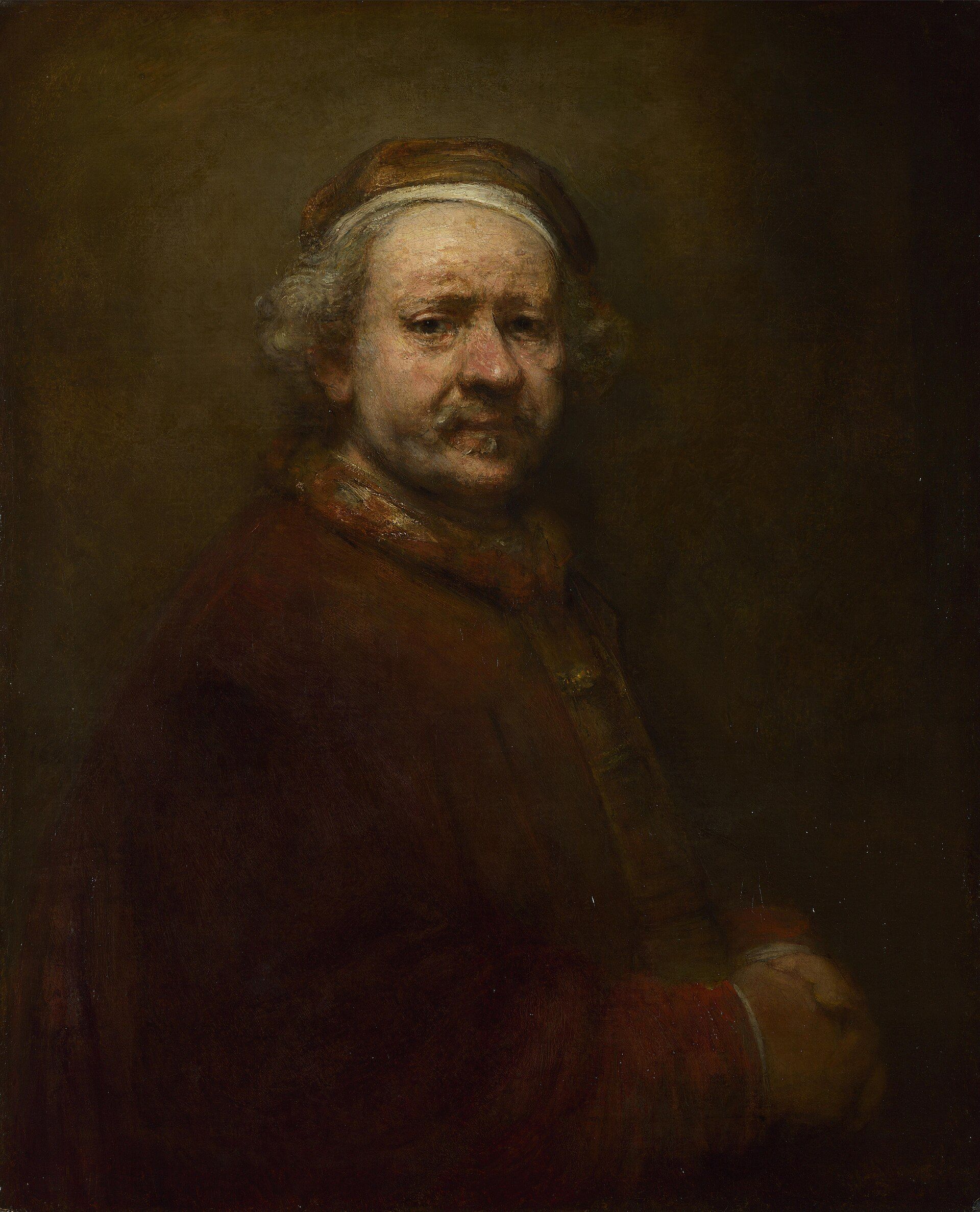
Rembrandt van Rijn painted, drew and etched himself again and again across most of his working life. The late self-portraits are the hardest to look at and the easiest to trust. The jaw has softened, the flesh beneath it has dropped, and the painter has left every fold where it fell. He did not retouch the face he had.
A woman in her fifties sits in my chair holding her phone at an angle that shows exactly what she wants gone. She does not want a facelift. She wants a firmer jawline and a smoother neck, with little downtime. Radiofrequency microneedling (RF microneedling) is the treatment most often suggested for that request. It does change the lower face and neck in measurable ways. What it changes is smaller and less predictable than the word "tightening" suggests, and the claim that a second device adds more rests on very little.
What does radiofrequency microneedling do to the lower face and neck?
RF microneedling pushes fine needles into the skin and releases radiofrequency energy at depth. The energy creates tiny, controlled zones of heat injury (coagulation) that the skin then repairs. The hope is that repair brings new collagen and a firmer dermis, which is why the treatment is sold as nonsurgical skin tightening for jowls, the jawline and the neck.
A 2026 systematic review in Aesthetic Plastic Surgery examined 41 studies, 15 of them randomized controlled trials, from a literature search covering 2015 to 2025 (Kumar et al., 2026). Its reading is cautiously positive. RF microneedling improved wrinkle scales, dermal density and submental volume in patients with laxity or photoaging, and side effects were mostly transient. The same review warns that studies used different devices and settings, reported temperature, pulse width and cooling inconsistently, and rarely followed patients for long (Kumar et al., 2026).
Does a higher energy setting produce more change?
In one study, higher energy per needle produced a larger zone of heat injury, and patients who received more total energy showed larger volume changes. In pig skin treated ex vivo at 20, 40, 60, 80 and 100 mJ per needle, the coagulated volume grew with every step. It rose more than tenfold across that range and tracked energy closely (r = 0.976) (Nguyen et al., 2025).
The same paper followed 24 analysed patients with a mean age of 55.9 years who had a mean of 1.7 sessions on the lower face and submental area. Total energy correlated with the change in 3D volume at six months (Spearman r = 0.676, 95% CI 0.363 to 0.852, p < 0.001) (Nguyen et al., 2025).
That does not mean turning the dial up is the answer. The clinical group had no control arm, and a correlation in an uncontrolled cohort cannot show that adding energy causes more change. The authors also note that the volume changes included decreases along the jawline and increases in the midface, so they cannot be read simply as new collagen (Nguyen et al., 2025).
How much did the jawline and neck change in patients?
In a 2026 trial from Hamburg, patients treated with RF microneedling alone had a mean submental volume change of −4.72 cm³ at 180 days. The change was significant but highly variable, with a standard deviation of 10.07 cm³ and a range from a 26.65 cm³ loss to a 16.01 cm³ gain (Nguyen et al., 2026). Blinded evaluators saw improvement along the jawline, the melomental area and the neck in both treatment groups, and patient satisfaction was 3.5 on a 0 to 4 scale in the RF-alone group (Nguyen et al., 2026).
Some will say a smaller submental volume is simply a tighter neck. That is partly true, because less volume under the chin can sharpen the angle. But a volume measurement is not a measurement of how firm the skin is, and the average hides a wide spread. Some patients lost volume. Some gained it.
Does adding a thulium laser improve the result?
Adding a 1927 nm thulium laser did not change submental volume, but it did improve pigmentation. In the Hamburg study, 26 patients received RF microneedling followed by the laser, plus three further laser sessions, and 27 received RF microneedling alone. The RF-alone arm was a previously published cohort, not a concurrent control group (Nguyen et al., 2026).
Volume at 180 days fell by 6.06 ± 7.73 cm³ with the combination and 4.72 ± 10.07 cm³ with RF alone, a difference that was not significant (p = 0.606). A colour score for pigmentation fell from 8.12 to 4.49 with the combination (p < 0.05) but from 6.35 to 4.91 with RF alone, which was not significant. Clinician ratings of hyperpigmentation and overall result were better in the combination group (Nguyen et al., 2026).
The comparison has real limits. The groups differed in mean age (50.7 versus 55.6 years), the combination group received higher RF energy, and the three extra laser sessions mean the study cannot separate the laser from simply having more treatment (Nguyen et al., 2026). The fair reading is that a laser may help skin tone. Nothing here shows it helps laxity.
What are the side effects, and how painful is it?
Side effects were mostly mild and short-lived, but they were not absent. All patients in the Hamburg trial had transient redness and swelling. In the RF-alone group, four patients developed perioral dermatitis that resolved within days and one had a hematoma at the orbital rim. In the combination group, one patient had post-inflammatory hyperpigmentation on the lower face, which resolved after the second laser session, and one had swelling lasting seven days, after which laser energy was reduced. No serious adverse events occurred (Nguyen et al., 2026).
Pain averaged 5.6 on a 0 to 10 scale with RF alone and 4.8 with the combination (p < 0.05), although the numbing cream was left on for 60 minutes only later in the combination group (Nguyen et al., 2026). The systematic review describes post-inflammatory hyperpigmentation as infrequent and self-limited (Kumar et al., 2026). Most patients in the Hamburg cohort had Fitzpatrick skin types II and III, so the data say little about darker skin (Nguyen et al., 2026).
Conclusion
RF microneedling is a reasonable nonsurgical option for mild to moderate laxity of the lower face and neck. The systematic review supports benefit with a favourable safety profile, and the Hamburg data show a measurable average change. None of the studies compared it with surgery or with other energy devices, so they cannot say where it ranks.
The consultation should describe a modest, variable improvement rather than a lift. Patients should hear that the average hides a wide range, that more energy has not been proven to mean a better result, and that an added thulium laser is justified by pigment and skin tone, not by firmness. It is also fair to ask which device and settings will be used, because the review found that reporting of settings is inconsistent. Patients with darker skin should hear that the evidence in them is thin.
Rembrandt painted the face he had. A good consultation describes the result in the same way.
For clinical assessments and consultation in Seoul: itsdrbock.com
Cover image: Self-Portrait at the Age of 63, Rembrandt van Rijn (1669). Public domain. Source: Wikimedia Commons

References
Kumar, N., Kim, H. M., Nishikawa, A., Heo, C. Y., & Wu, W. T. L. (2026). Effectiveness of radiofrequency microneedling in the treatment of dermatological conditions: A systematic review. Aesthetic Plastic Surgery, 50(13), 5282–5317. https://doi.org/10.1007/s00266-026-05834-y
Nguyen, L., Bartholomeusz, J., Schneider, S. W., & Herberger, K. (2025). Histological and clinical dose-response analysis of radiofrequency microneedling treatment for skin rejuvenation. Lasers in Medical Science, 40(1), Article 75. https://doi.org/10.1007/s10103-025-04335-9
Nguyen, L., Blessmann, M., Schneider, S. W., & Herberger, K. (2026). Radiofrequency microneedling with 1927 nm thulium laser versus radiofrequency microneedling monotherapy for rejuvenation of photoaged skin. Journal of Cosmetic Dermatology, 25(1), Article e70685. https://doi.org/10.1111/jocd.70685
More From the Blog

Chemical Peels for Acne Work About Equally Well. The Real Choice Is How Your Skin Tolerates the Acid.

Laser Tattoo Removal Works Best on Black and Blue Ink. Whether a Picosecond Laser Does It Better Is Still Debated.