General
Trapezius Botox Reshapes the Shoulder Line. The Evidence Is Small, Short and Mostly Uncontrolled.
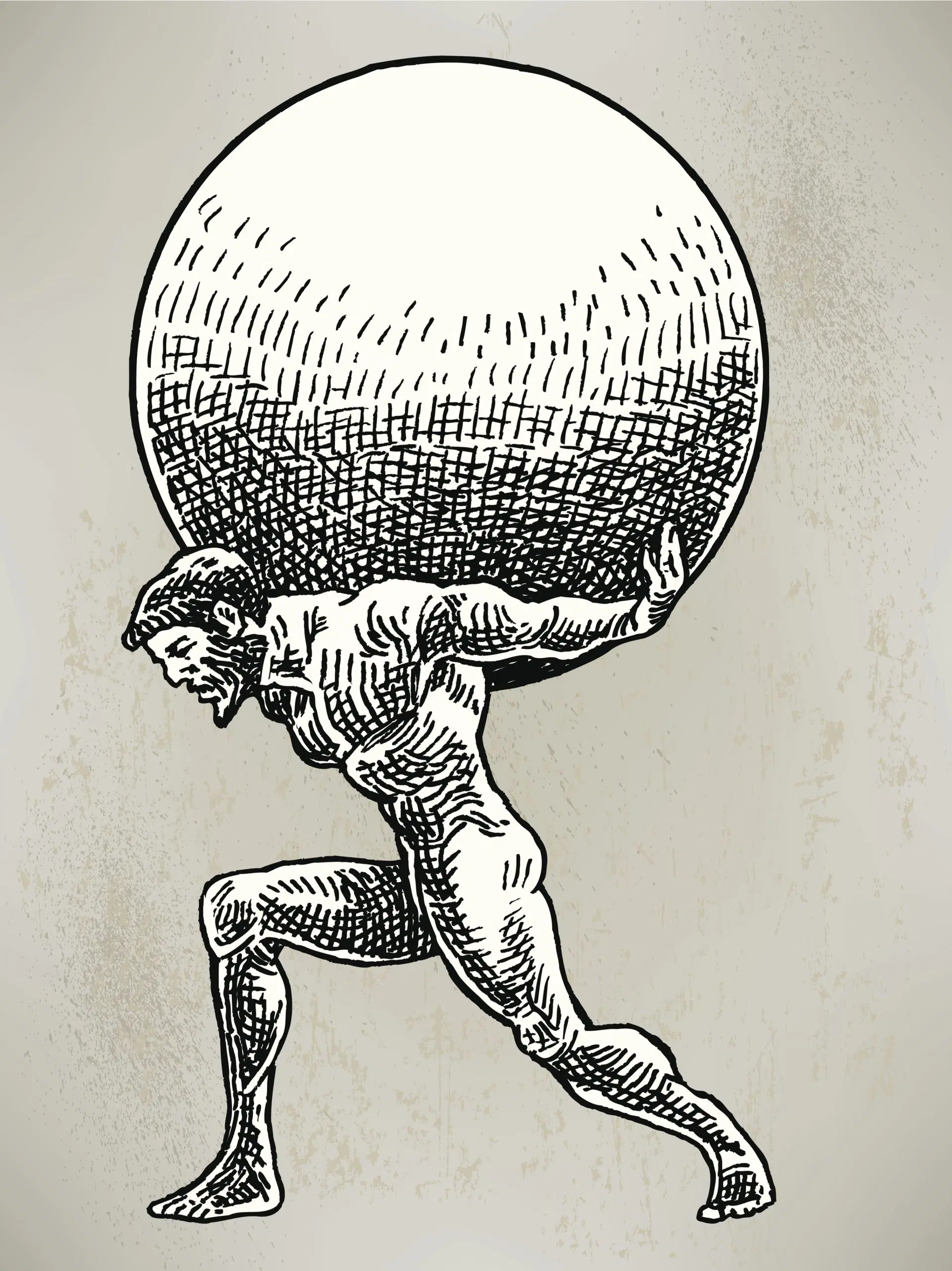
In Greek myth, the Titan Atlas is condemned to hold up the sky on his shoulders. The story has been retold for nearly three thousand years, and no one who retells it has stopped to ask how thick his trapezius muscle is. The weight is the point, and the shoulders only have to carry it.
Patients come to me with the reverse request. They ask about trapezius Botox, also called shoulder-line Botox or trapezius slimming, because the muscle that runs from the base of the skull out to the shoulders makes their neck look short and their shoulders look square. Botulinum toxin does thin this muscle in the studies published so far. Those studies are small, short and mostly without a control group, and that shapes what I can honestly tell a patient. Four papers carry the case: a 2025 systematic review in International Journal of Aesthetic Plastic Surgery, a 2025 retrospective study in Plastic and Reconstructive Surgery Global Open, a 2021 case series in Journal of Orthopaedic Surgery and Research, and a 2026 randomized trial in Aesthetic Plastic Surgery.
Does trapezius Botox make the muscle smaller?
Yes. Every study in the 2025 systematic review reported benefit, and an imaging study found the muscle smaller up to six months after injection (Kapoor et al., 2025; Park et al., 2025). Botulinum toxin blocks the signal that a nerve sends to a muscle. A muscle that receives less signal is used less, and over weeks it gets thinner.
The systematic review pooled nine studies with 121 patients and found that all were effective to a variable extent (Kapoor et al., 2025). The imaging study, a retrospective review of 22 patients treated with incobotulinumtoxinA and followed at 1, 3 and 6 months, measured the surface area of the shoulder contour. It was 28.82% smaller at 1 month, 26.83% at 3 months and 28.74% at 6 months compared with baseline (all P < 0.001). Ultrasound thickness was also lower than baseline at each visit, at 5.20 mm, 4.64 mm and 5.23 mm (P < 0.001) (Park et al., 2025).
How long does the change in the shoulder line last?
In the longest follow-up here, the thickness reduction was still statistically significant 44 weeks after a single treatment, although the evidence for it weakened over time (Chen et al., 2021). This was a single-arm study of 20 women who received 50 units of botulinum toxin per side, spread over five ultrasound-guided points. Trapezius thickness was measured at intervals up to 44 weeks. The changes were highly significant at 4, 12 and 20 weeks (P < 0.001) and less so at 28, 36 and 44 weeks (P = 0.011, 0.022 and 0.032) (Chen et al., 2021).
The imaging study above found the area reduction still present at 6 months (Park et al., 2025). Neither study had a control group, so neither can say how much of the change would have happened anyway. They agree with each other, which is more than many aesthetic studies can claim.
Does a higher dose slim the trapezius more?
In the one randomized comparison here, 80 units did not beat 40 units (Kim et al., 2026). The double-blind trial assigned 20 women to 40 or 80 units of letibotulinumtoxinA, divided across 10 points, and followed them for 12 weeks. Both groups showed a smaller trapezius contour area and similar satisfaction, with no significant difference between the doses (Kim et al., 2026).
The trial is small, with 10 women in each arm, it has no placebo arm, and its funder is listed as the manufacturer (Kim et al., 2026). The wider picture is no clearer. The systematic review found that doses, products and injection patterns differed widely from study to study (Kapoor et al., 2025). I would not read any of these papers as a recommended dose.
What are the side effects of trapezius Botox?
Adverse events were reported in 13 of 121 patients (10.7%) in the systematic review, and they were primarily mild and transient (Kapoor et al., 2025). The most important one is temporary weakness of the shoulder and neck, which follows from the way the treatment works. In the 20-woman case series, one patient had muscle weakness in the first month that settled within about a month (Chen et al., 2021). The imaging study reported no significant adverse events (Park et al., 2025).
The review also lists injection pain, bruising and soreness among the minor effects, and it recommends injecting the medial half of the upper trapezius to stay clear of the accessory nerve that supplies the muscle (Kapoor et al., 2025). Those are small numbers from small studies, so the absence of serious events here is not proof of safety.
The strongest objection
Some will say the measurements are clear: the muscle shrinks on ultrasound, patients are satisfied, and the case is closed. That is partly true. The direction of the effect is consistent across designs (Kapoor et al., 2025; Park et al., 2025; Chen et al., 2021).
But the imaging study was retrospective, from one center, with 22 patients and no comparison group (Park et al., 2025). The case series had 20 women and no control group (Chen et al., 2021). The randomized trial compared two doses with no placebo arm and 10 patients per arm (Kim et al., 2026). The systematic review did not formally appraise the risk of bias of its nine studies, and it mixed products and doses (Kapoor et al., 2025). A consistent signal from weak designs is a reason to keep studying a treatment, not a reason to stop.
What should you ask before trapezius Botox?
Ask first whether the bulk you want reduced is muscle. These studies enrolled women with trapezius hypertrophy and measured muscle thickness or contour area (Chen et al., 2021; Park et al., 2025). They say nothing about shoulders that look square because of bone, posture or fat.
Then ask which product and how many units are planned, because the papers give no single dose (Kapoor et al., 2025; Kim et al., 2026). Ask where the injections will go and how the nerve is avoided. Ask what temporary weakness would feel like, since it was the main adverse event reported (Kapoor et al., 2025). And ask how long results have been followed. The longest follow-up here was 44 weeks (Chen et al., 2021).
The Clinical Bottom Line
Trapezius Botox is a reasonable option for a patient with trapezius hypertrophy who wants a lighter shoulder line. The muscle gets thinner on measurement, and the change was still detectable at 6 months in one study and at 44 weeks in another (Park et al., 2025; Chen et al., 2021). Side effects were mostly mild and temporary (Kapoor et al., 2025).
The caution is about what the evidence cannot yet tell us. There is no placebo-controlled trial among these papers, no agreed dose, and no follow-up beyond about a year. The honest message to a patient is that the muscle shrinks, the shoulder line softens, and the long-term questions are open.
Atlas never got to put the sky down. A trapezius treated with botulinum toxin gets a lighter load for a while, and the studies so far cannot say how long that while lasts.
For clinical assessments and consultation in Seoul: itsdrbock.com
References
Chen, W., Zhang, X., Xu, Y., Xu, Z., Qin, H., & Zhang, L. (2021). Ultrasound-guided five-point injection of botulinum toxin for patients with trapezius hypertrophy. Journal of Orthopaedic Surgery and Research, 16, Article 634. https://doi.org/10.1186/s13018-021-02758-y
Kapoor, K. M., Batra, A., Kaur, A., Kapoor, A., & Papadopoulos, T. (2025). Efficacy and safety of botulinum toxin type A injection for trapezius muscle contouring: A systematic review. International Journal of Aesthetic Plastic Surgery, 1(1), 76–84. https://doi.org/10.1177/30499240251320906
Kim, T. H., Kang, H. I., Lee, S. J., & Jeong, W. S. (2026). Efficacy and safety of letibotulinumtoxinA injection for trapezius hypertrophy: A prospective, randomized, double-blind trial. Aesthetic Plastic Surgery, 50(13), 5260–5268. https://doi.org/10.1007/s00266-026-05802-6
Park, J.-Y., Park, S., Lee, J. S., & Lee, D. H. (2025). Efficacy and safety of incobotulinumtoxinA for trapezius muscle reduction: Quantitative evaluation with imaging studies. Plastic and Reconstructive Surgery Global Open, 13(5), e6782. https://doi.org/10.1097/GOX.0000000000006782
More From the Blog

Chemical Peels for Acne Work About Equally Well. The Real Choice Is How Your Skin Tolerates the Acid.
Laser Tattoo Removal Works Best on Black and Blue Ink. Whether a Picosecond Laser Does It Better Is Still Debated.